
MORE
THAN
THE FIGHT.
The UFC fighter on ordinary discipline, extraordinary ambition, and the person he wants to become beyond the Octagon.
READ THE FEATURE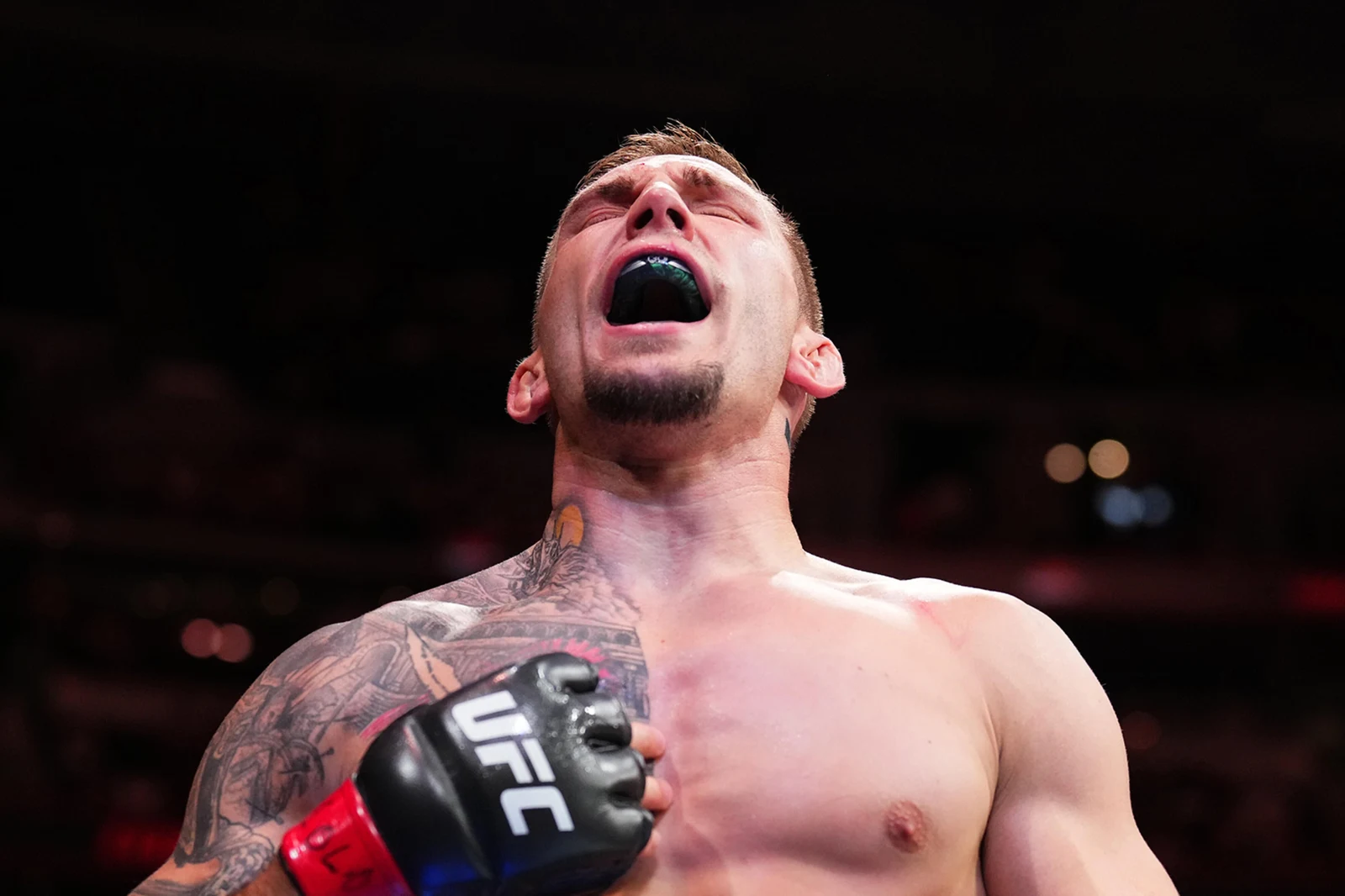
Ask Evan Elder what a strong mindset looks like, and the answer does not stay inside a cage. It follows him home, all the way to the dishes in the sink.
The day has been long. Leaving the washing up for later would be easy. In Elder’s telling, doing it anyway belongs to the same conversation as training, sacrifice, and the willingness to face something difficult. So does helping a neighbor move furniture when he would rather go inside. So does being patient when an angry response would come more naturally.
These are the examples he reaches for when Victevo asks about discipline. They are small, unglamorous, and useful precisely because of that. His version of strength is not reserved for the moments when an arena is watching.
For Elder, delaying gratification means choosing the harder, more worthwhile action in front of him. A clean home, a better response in a relationship, a favor for someone who needs help: each is a chance to practice the person he wants to be.
The ambition to become a UFC world champion has not disappeared. The definition of a life worth working toward has grown around it.
A dream before a nickname.
Elder describes his childhood in Hillsboro, Missouri, through woods, chickens, a garden, video games, and the rough-and-tumble play of friends who imagined they were getting ready for the UFC. Watching fights with his stepfather gave that imagination a destination. He places the beginning of the dream at about six years old.
Training came later. When his school offered wrestling in seventh grade, he joined. After two school years, his family found an MMA gym, and he committed to that path. “I stopped wrestling and focused on MMA full time and never looked back,” he recalls.
At 19, he packed his car and drove to California in search of better training. The decision made practical what had long felt personal and spiritual. “I thought it was the purpose God had placed on my life,” he says of fighting.
The nickname arrived in stages. Elder recalls winning a kickboxing bout at 15 against a 23-year-old opponent, stopping him in the second round. Local MMA reporters called the teenager a phenom and continued using the description as he competed.
He did not immediately adopt it as an official fight name. That happened while he was trying to raise money for the move away from home. He wanted to sell shirts, needed something to put on them, and remembered what the reporters had been calling him. “The Phenom” became the name on the shirt, then the name that stayed.
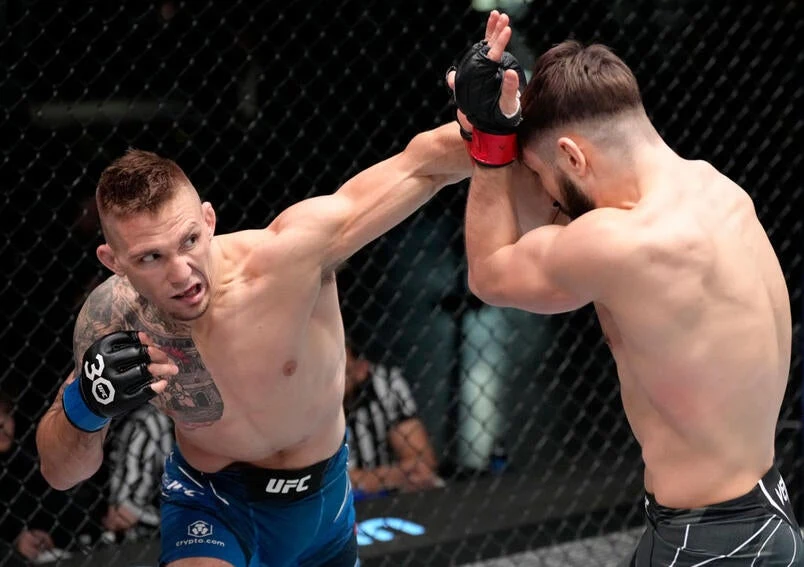
From becoming a better fighter to becoming a better person.
When the measure changed.
Some turning points do not come with a result on a fight record. Elder describes one that occurred while he was recovering from a broken jaw, sustained when someone training beside him accidentally kicked him in the face.
During that time back home, his 19-year-old cousin died in a car accident. At the funeral, an idea Elder had often considered became painfully immediate: a life is finite, and the time available to live it cannot be assumed.
Until then, he says, his attention had been centered on becoming the best fighter he could be. The loss made him question why the same intentional effort should stop at the edge of the mat. He wanted to carry it into the rest of his life, into the way he treated people and the standards he set for himself outside competition.
He describes that shift as the beginning of a more complete pursuit of personal development. Fighting remained part of the work. It was no longer the whole measure.
“not just being great in the cage, but great in every area of life”
Faith gives him purpose. Discomfort gives him something to work through.
A personal argument with fear.
There is little hesitation in Elder’s response to a question about pressure and self-doubt. “I have a personal vendetta against fear,” he writes. He sees it as one of the forces that can keep a person from pursuing the life they want.
His answer is to move toward uncomfortable situations rather than organize his life around avoiding them. In his experience, working through those moments builds resilience and makes the next difficult choice feel more possible. It is a personal approach to uncertainty, not a claim that discomfort should override judgment or safety.
Faith sits beneath that effort. Elder describes a belief that his life has purpose and that working hard and doing the right thing matter beyond any immediate reward. His Christianity is not an accessory to the fighting story; it is part of how he explains the story to himself.
The UFC debut tested that sense of direction. Reaching the organization felt like years of sacrifice becoming real. Losing his first appearance, in what he describes as a one-sided fight, made the moment hurt all the more.
But the loss also sharpened the task ahead. Getting there was not the same as having finished the work. Elder remembers the experience as fuel for an already-burning ambition.
He views wins as evidence that an approach is working. Losses demand closer inspection: where he needs to improve, where his attention should go, and what to do next. In both cases, the result is information he has to use.
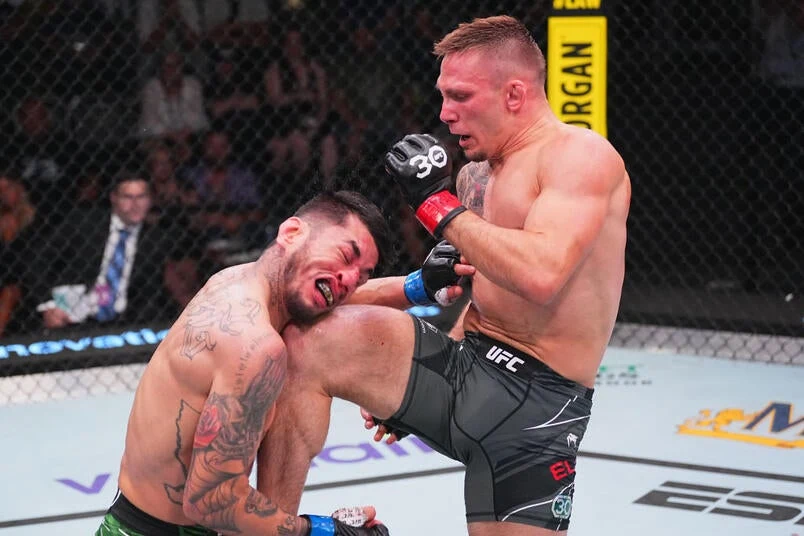
EFFORT.
That is the word Elder chooses to describe his fighting. He is willing to empty the tank, take a chance, fall short, and try again.
He also knows willingness is not enough on its own. He credits high-level coaching with helping him turn raw effort into better technique and skill.
In his interview, Elder identifies the UFC Performance Institute in Las Vegas as his main training base, with Joe Schilling coaching his kickboxing and Jason Manly his grappling. His emphasis is on continuing to learn, not pretending that determination makes instruction unnecessary.
Working harder matters. Understanding more matters, too.
Knowing better is part of getting better.
Elder’s earliest attempt at fight nutrition was earnest and poorly informed. Preparing for his first fight at 15, he knew broccoli had a healthy reputation. So he ate plates of it, without understanding what else his body needed.
He offers the memory as an example of a mistake, not a method to imitate. Wanting to do the right thing had outpaced his understanding of how to do it. That gap helped drive a deeper interest in food, health, and performance.
Today, he describes paying more attention to the amount and timing of macronutrients and to nutrient-dense whole foods. His priorities are personal: he wants his eating to support how he feels and functions, not merely how lean he looks.
The same appetite for understanding shows up in the books and podcasts he names. His reading ranges from David Goggins to Atomic Habits, The 7 Habits of Highly Effective People, and The Obstacle Is the Way. He also mentions The Joe Rogan Experience, Huberman Lab, and Modern Wisdom. He regards learning as something to practice, much as he practices physically.
That distinction is central to what he would like to offer a younger athlete. He wants to encourage belief and commitment, but he also wants the athlete to understand that effort has to be informed. In his words, “hard work alone will not get you there.”
He is particularly drawn to an idea about wisdom and connectedness: learning more about one part of life can reveal connections to the others. It helps explain why, in this conversation, a question about fighting can become a conversation about books, relationships, or doing the dishes.
There are deeper levels of understanding to pursue. For Elder, finding them is part of the job.
Elder’s nutrition comments describe his personal experience, not an individualized eating plan or medical advice. This feature does not prescribe weight cutting, training loads, or recovery protocols.
When the
gloves come off.
The fighter who pursues difficult things also knows the value of a dark theater, a good meal, and being with his people.
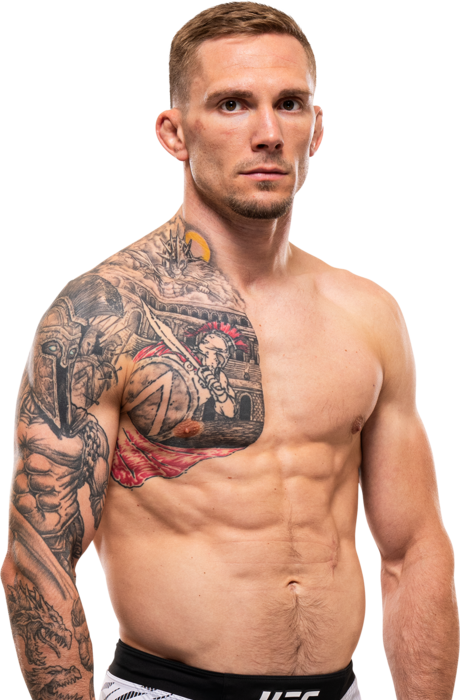
A seat at the movies.
Elder likes going to the cinema to switch off. With a Regal Unlimited pass, he says he goes several times a week, happy to watch a broad range of films at the end of the day.
A different sound for every mood.
He will not choose one favorite song. Country brings him back to gratitude, family, and God. Rap feeds ambition. Rock and metal bring intensity. Mac Miller reminds him to enjoy and celebrate life.
Sushi. Or a steakhouse.
Sushi is his favorite meal. A steak with potatoes and vegetables at a good steakhouse is another answer that comes easily.
Home moves with family.
Missouri feels like home because that is where his family tends to be. But the place is not the defining part. As he puts it, “home would be wherever they are.”
Passionate. Driven. A little crazy.
Asked how the people closest to him would describe him, Elder is careful not to answer for them. Those are the words he imagines might come up, and he admits he would enjoy finding out.
The person behind the result.
One life. More to give.
Ask Elder about his long-term goals, and he returns to becoming the fullest version of himself. He wants that effort to reach everything he does, not just what happens in a fight.
The legacy he describes is one of inspiration: helping people expect more from themselves, recognize the value of their time, and love deeply. Sharing the love he understands through his Christian faith is part of that purpose.
There is an appealing consistency in the way he explains it. The child with a dream, the teenager selling shirts, the fighter confronting a loss, and the man deciding whether to leave the dishes until tomorrow are not separate characters. They are different moments in the same unfinished work.
The Octagon gives that work an audience. Elder wants the rest of his life to show that it means something when the audience is gone.